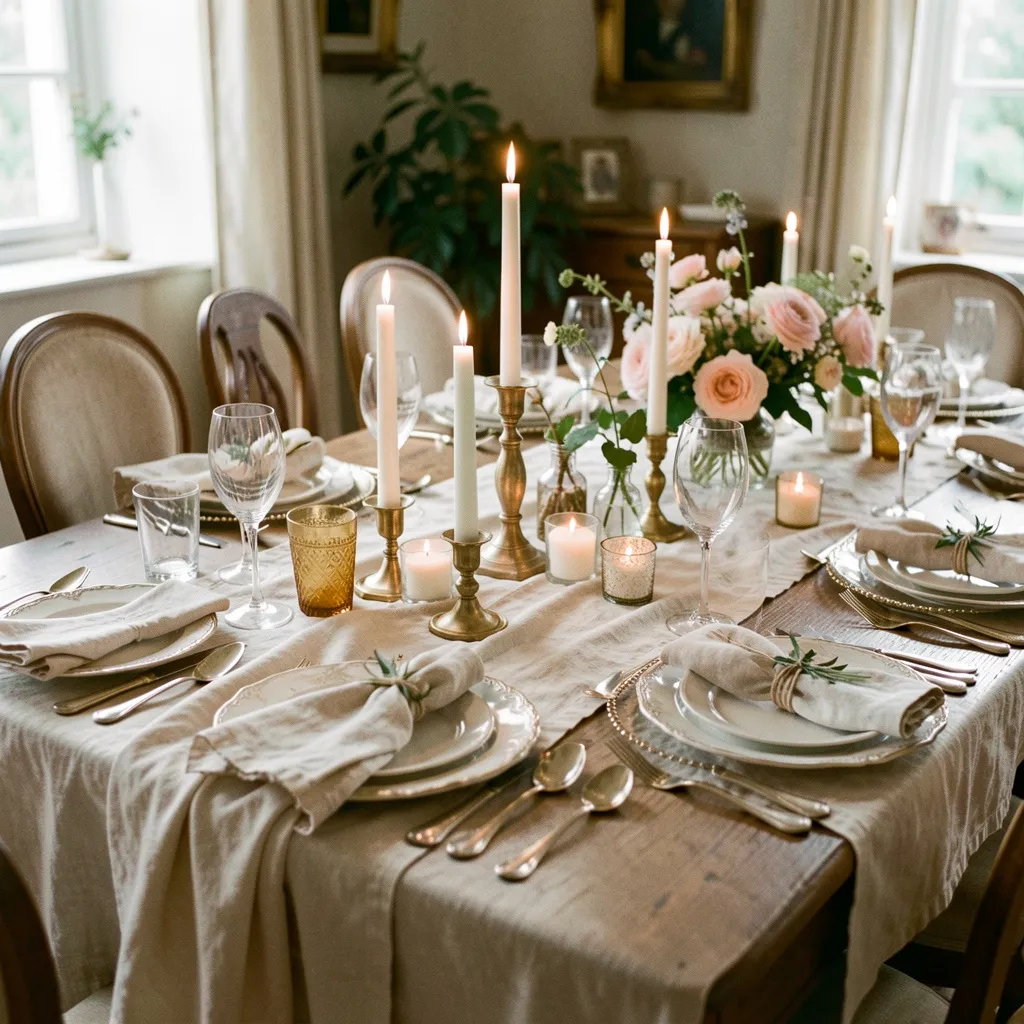
Textile Selection
Understanding fabric choices and their impact on visual composition
Linen Characteristics
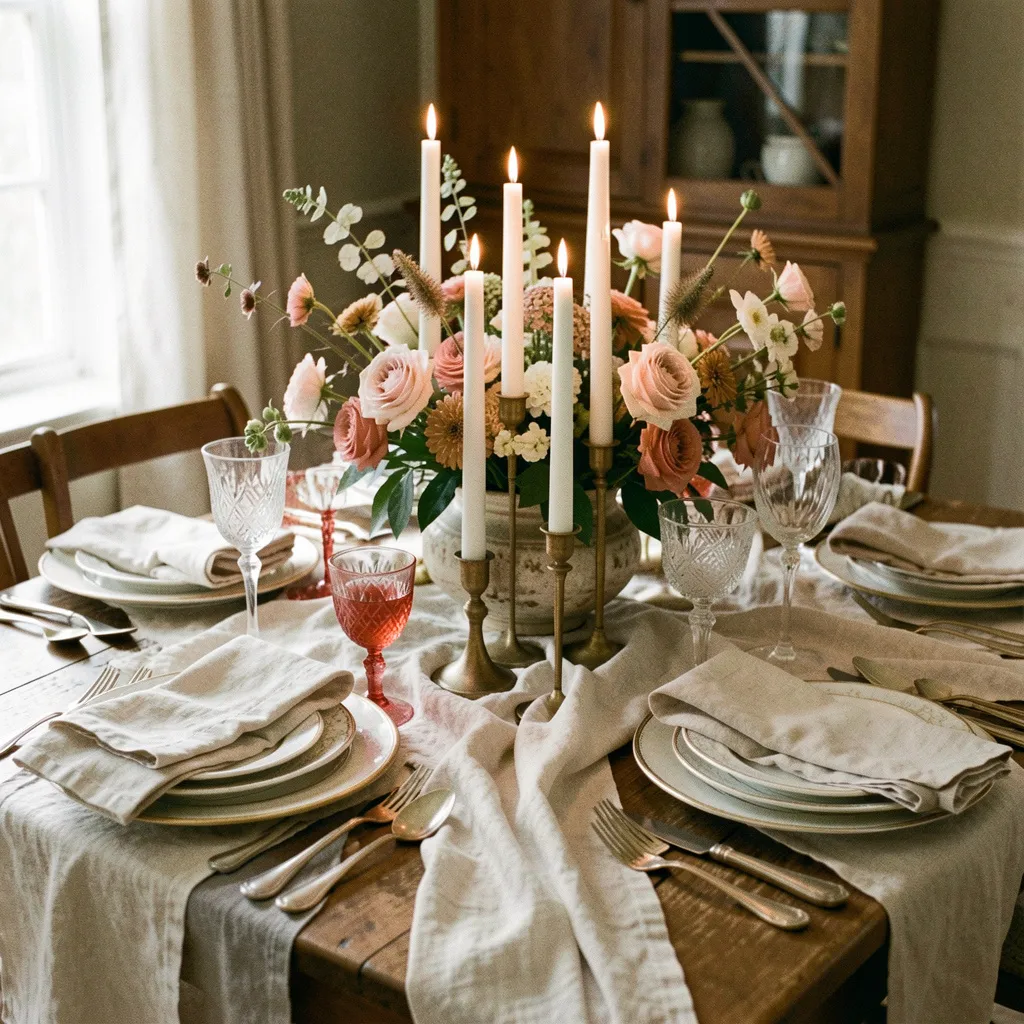
Natural linen offers texture and breathability, creating visual interest through its inherent irregularities. The weave pattern contributes to the overall aesthetic while maintaining a sense of organic authenticity.
Weight and drape are crucial considerations. Heavier linens provide structure, while lighter weights offer more fluid movement and casual elegance.
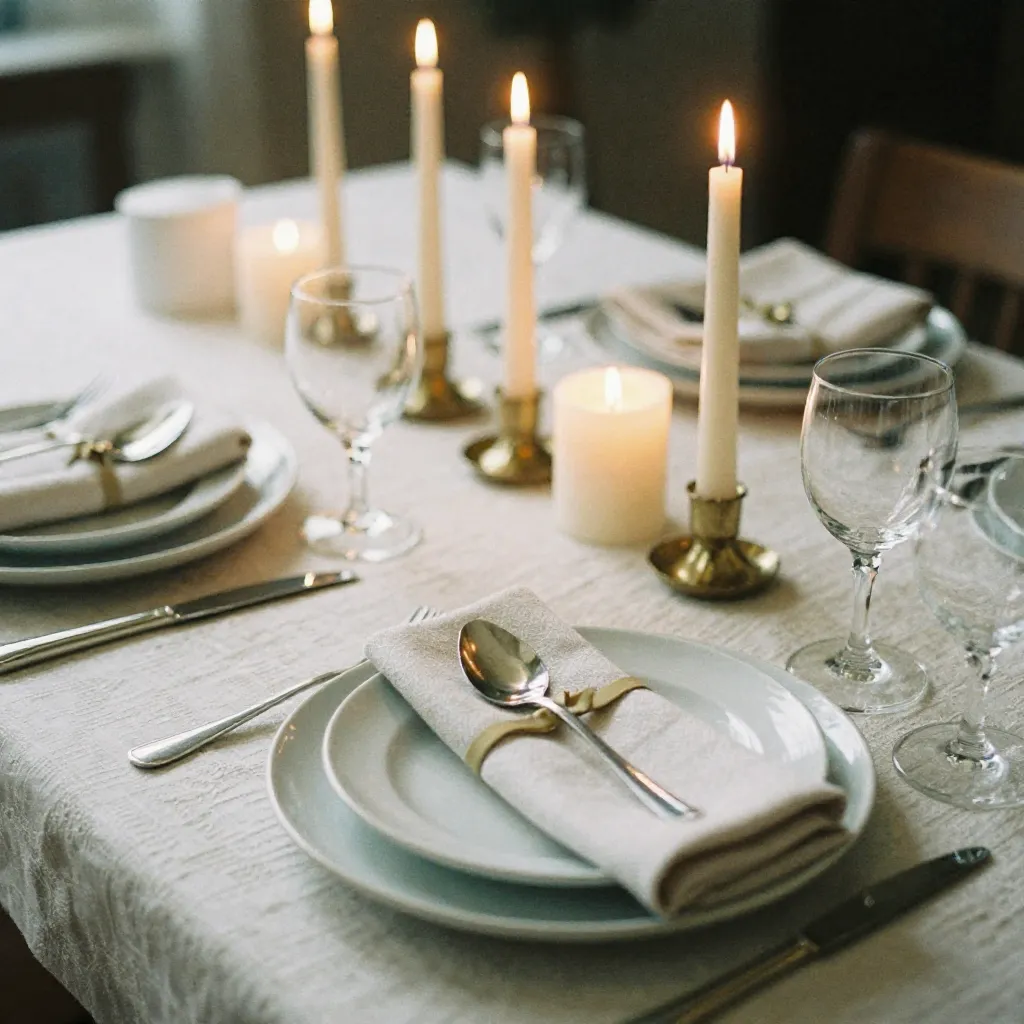
Candle Arrangements
Sculptural elements that enhance atmosphere through form and light
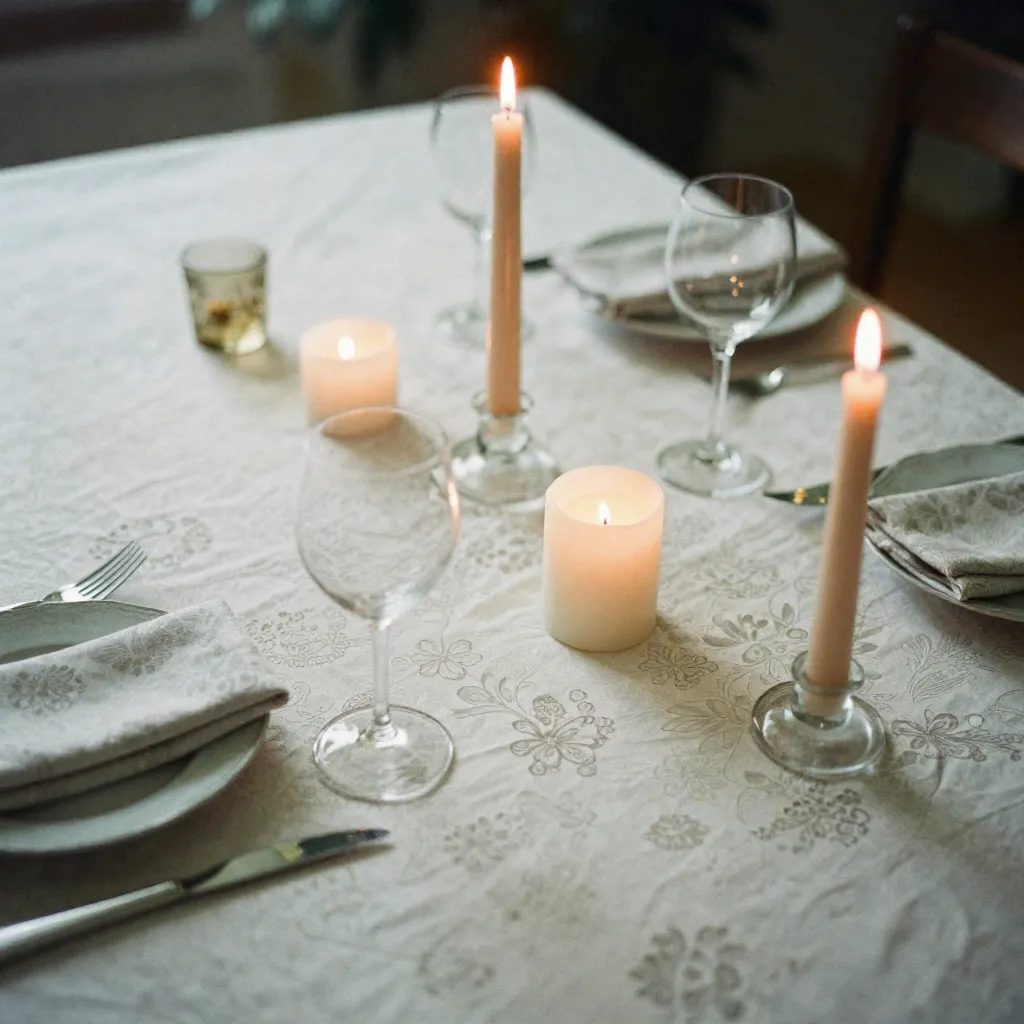
Height Variation
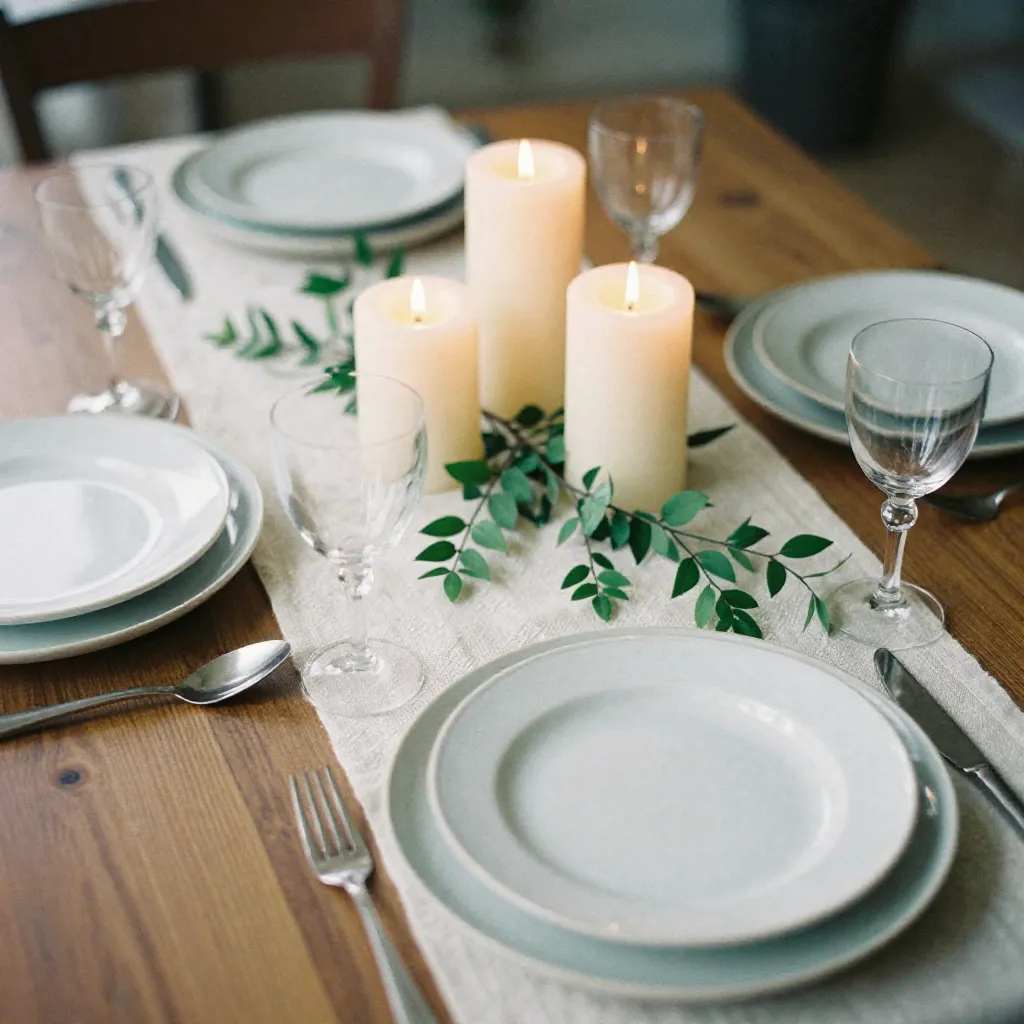
Mixing candle heights creates visual rhythm and depth. Taller candles draw the eye upward, while lower arrangements maintain intimacy.
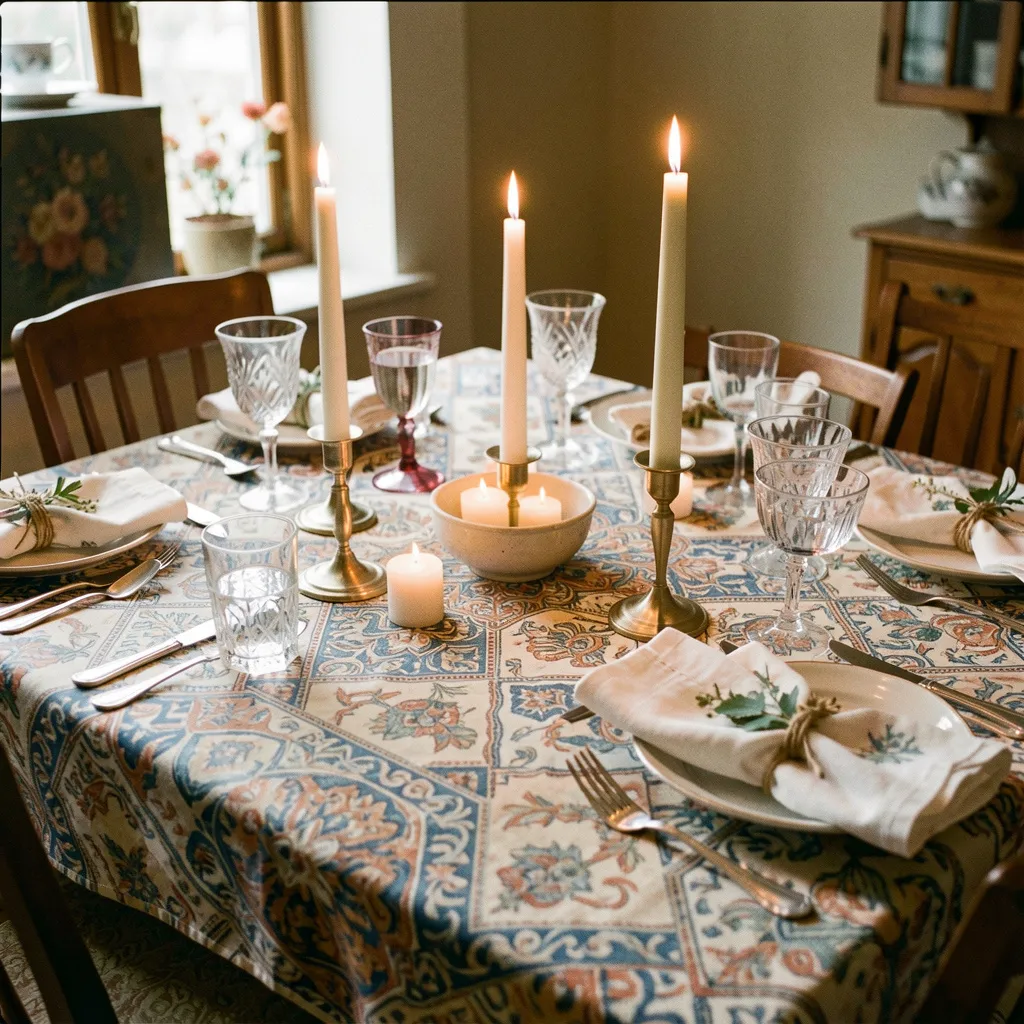
Placement Strategy
Strategic positioning ensures even light distribution while maintaining visual balance. Consider sightlines and conversation flow when arranging.
Material Considerations
Wax composition, wick type, and container design all contribute to the overall aesthetic. Natural materials often complement organic tablescape themes.
Design Integration
How individual elements work together to create cohesive compositions
Harmonious Relationships
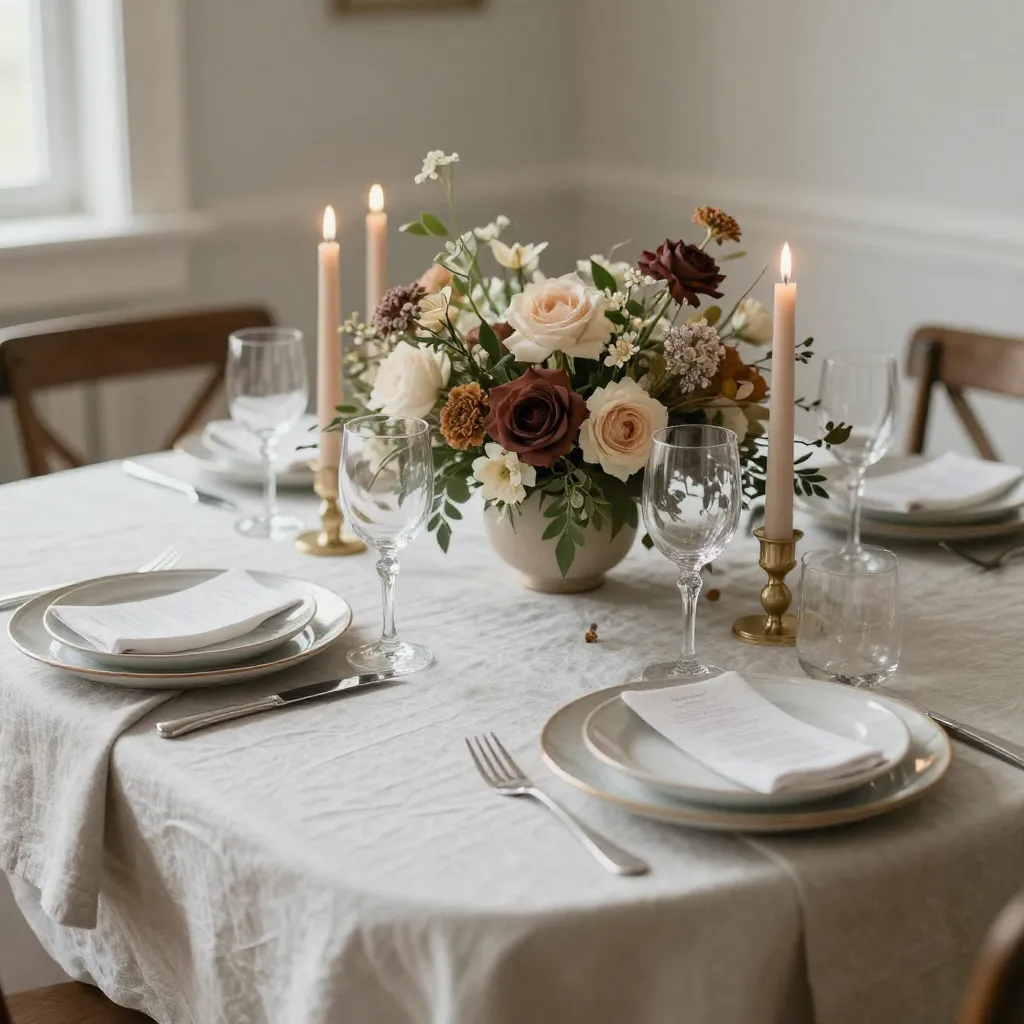
Each element should complement rather than compete. Consider material textures, color relationships, and scale when selecting pieces.
Negative space is equally important. Allowing breathing room between elements prevents visual clutter and maintains clarity.
Functional Aesthetics
While visual appeal is paramount, functionality remains essential. Every element should serve both aesthetic and practical purposes.