The Geometry of Plate Placement
Understanding spatial relationships in table design
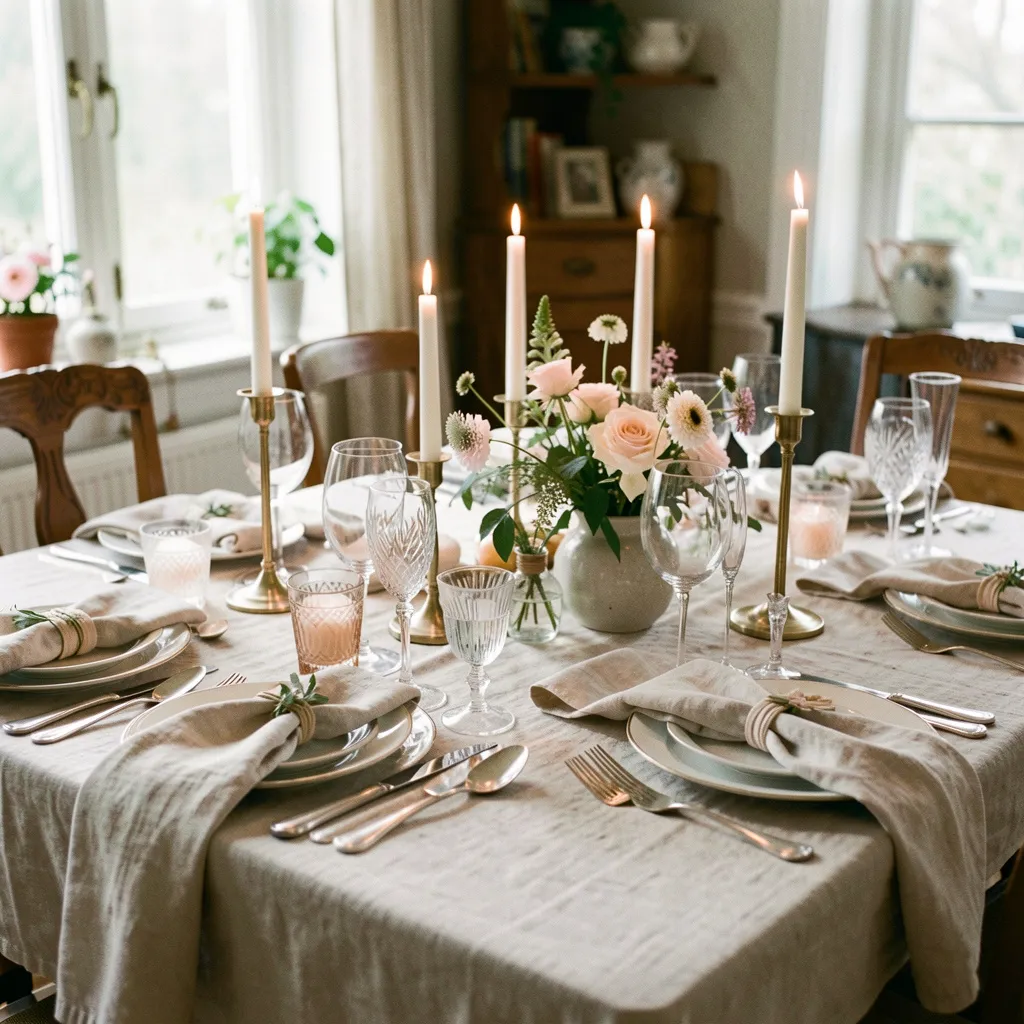
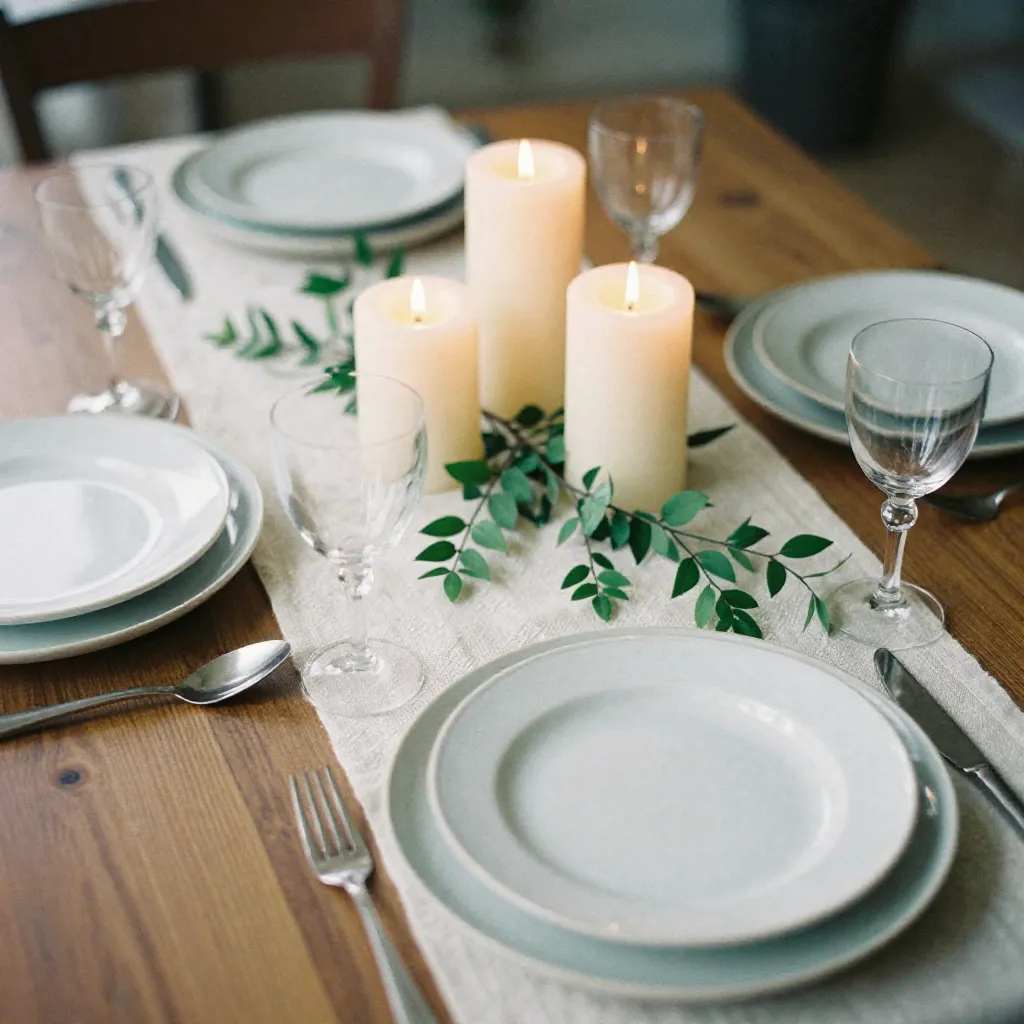
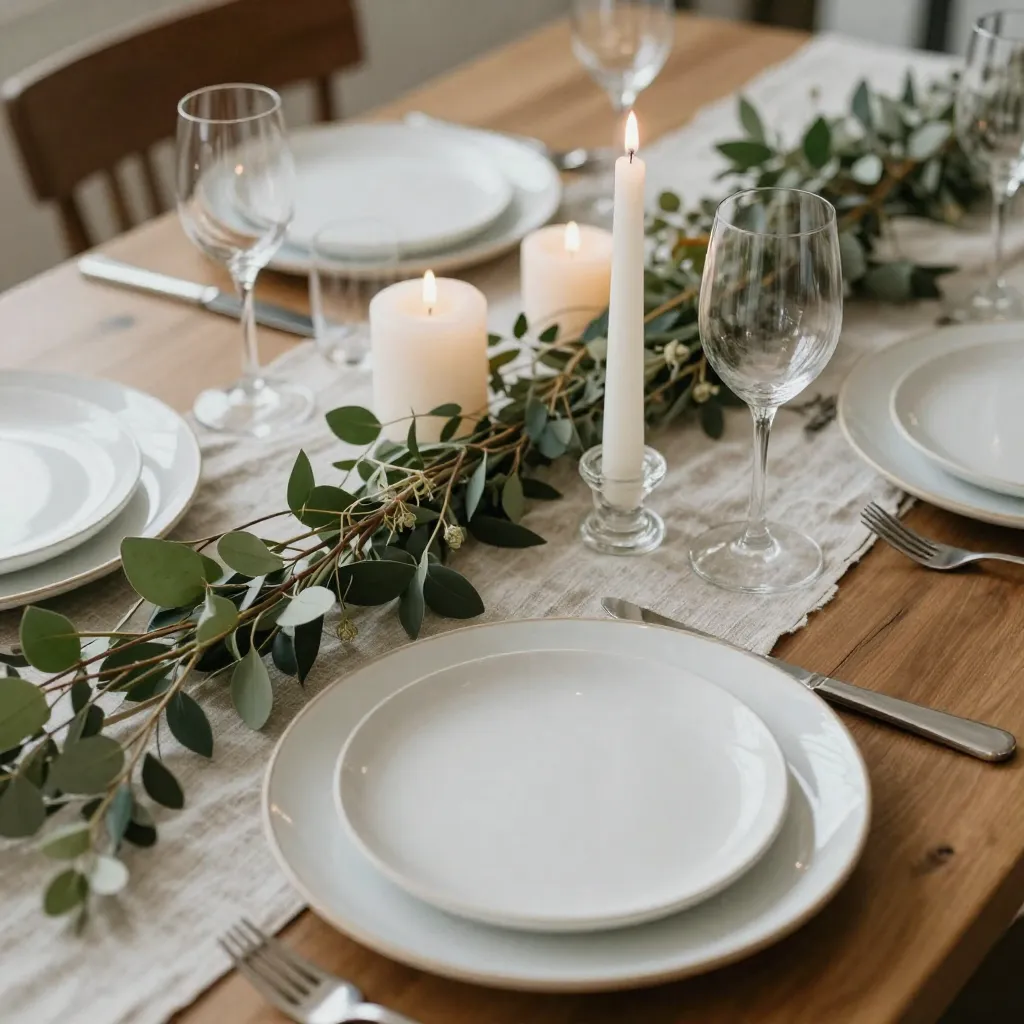
Plate placement follows principles of visual balance and functional accessibility. The distance between place settings affects both the visual rhythm of the table and the ease of movement during service.
Consider the relationship between plate size and table width. Larger tables accommodate more generous spacing, while intimate settings benefit from closer arrangements that encourage conversation.
Angular positioning can create dynamic visual interest, while traditional centered placement offers timeless elegance. The choice depends on the overall aesthetic direction and the mood you wish to create.
How Lighting Temperatures Change the Color of Linen
The science and art of color perception in table design
Warm Light (2700K-3000K)
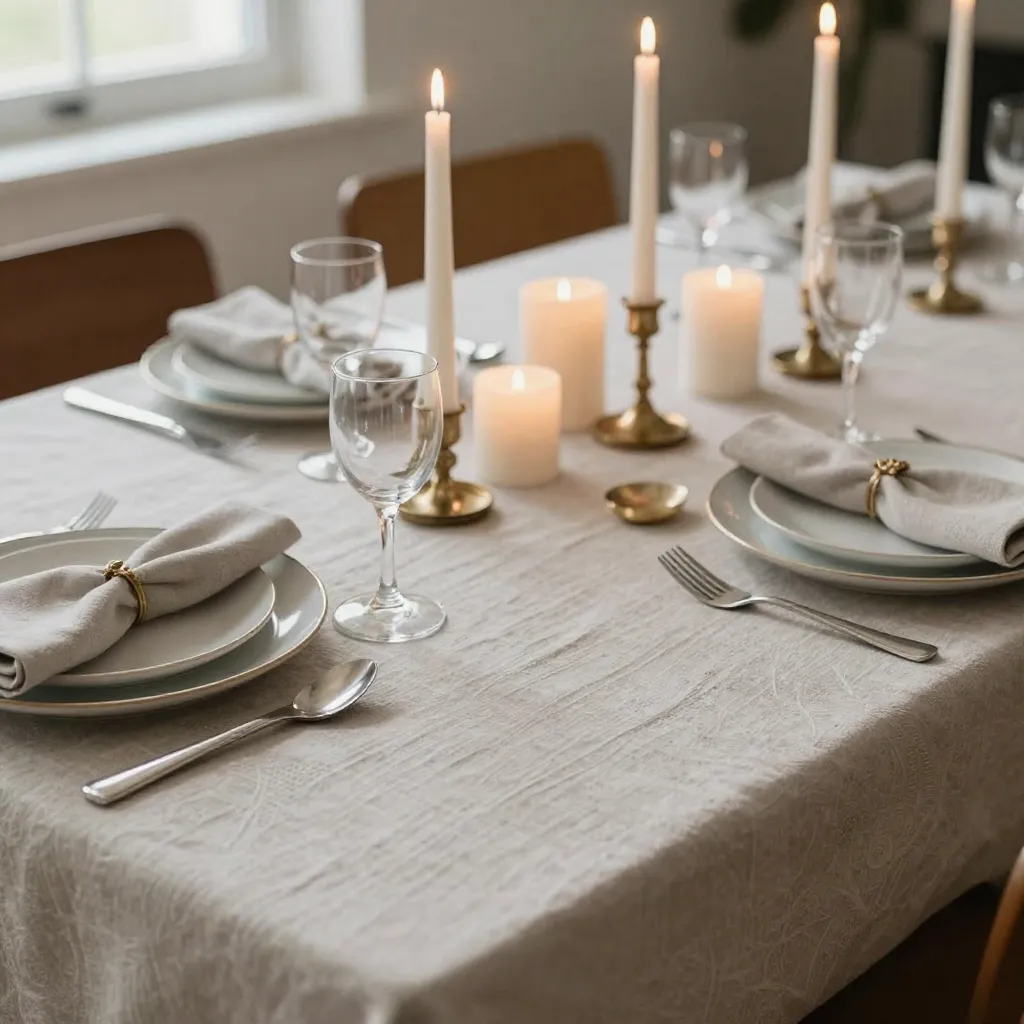
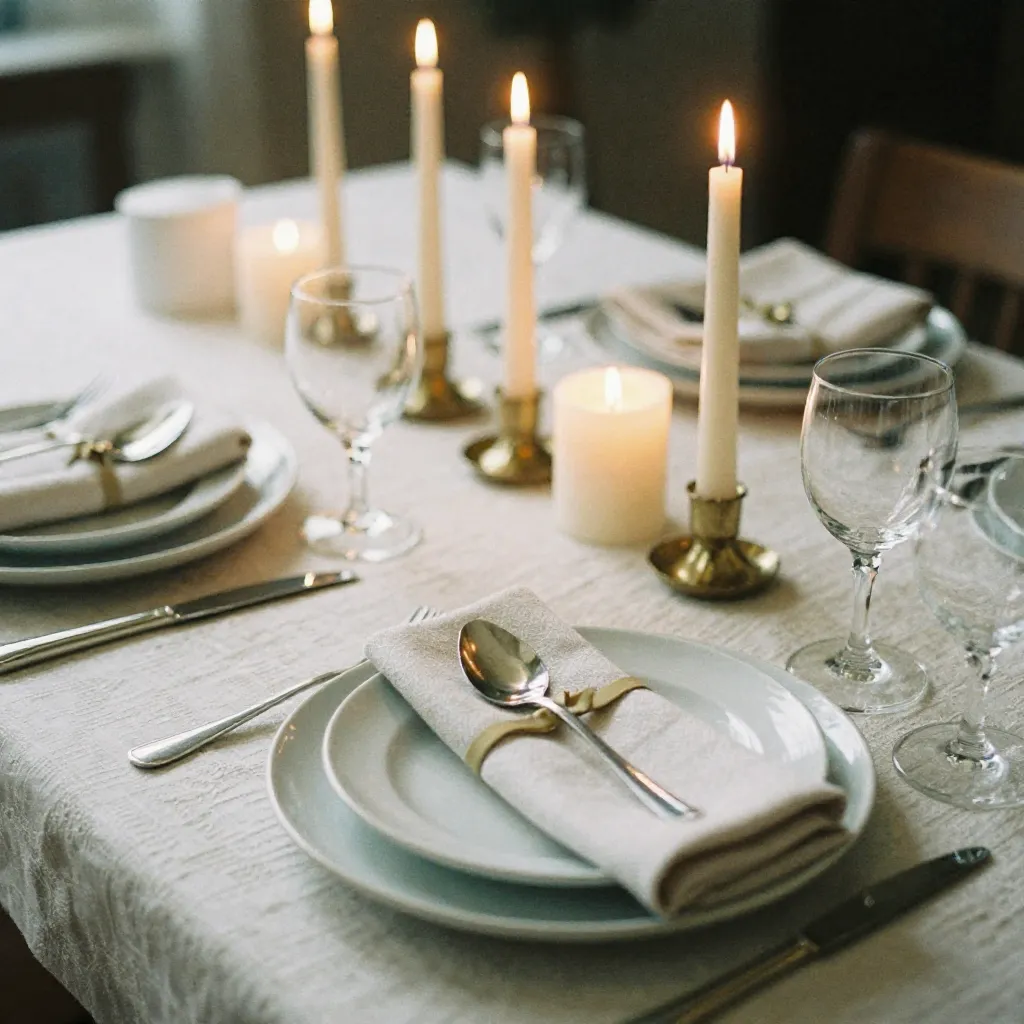
Incandescent and candlelight create warm tones that enhance cream and beige linens, making them appear richer and more inviting. White linens take on a golden quality.
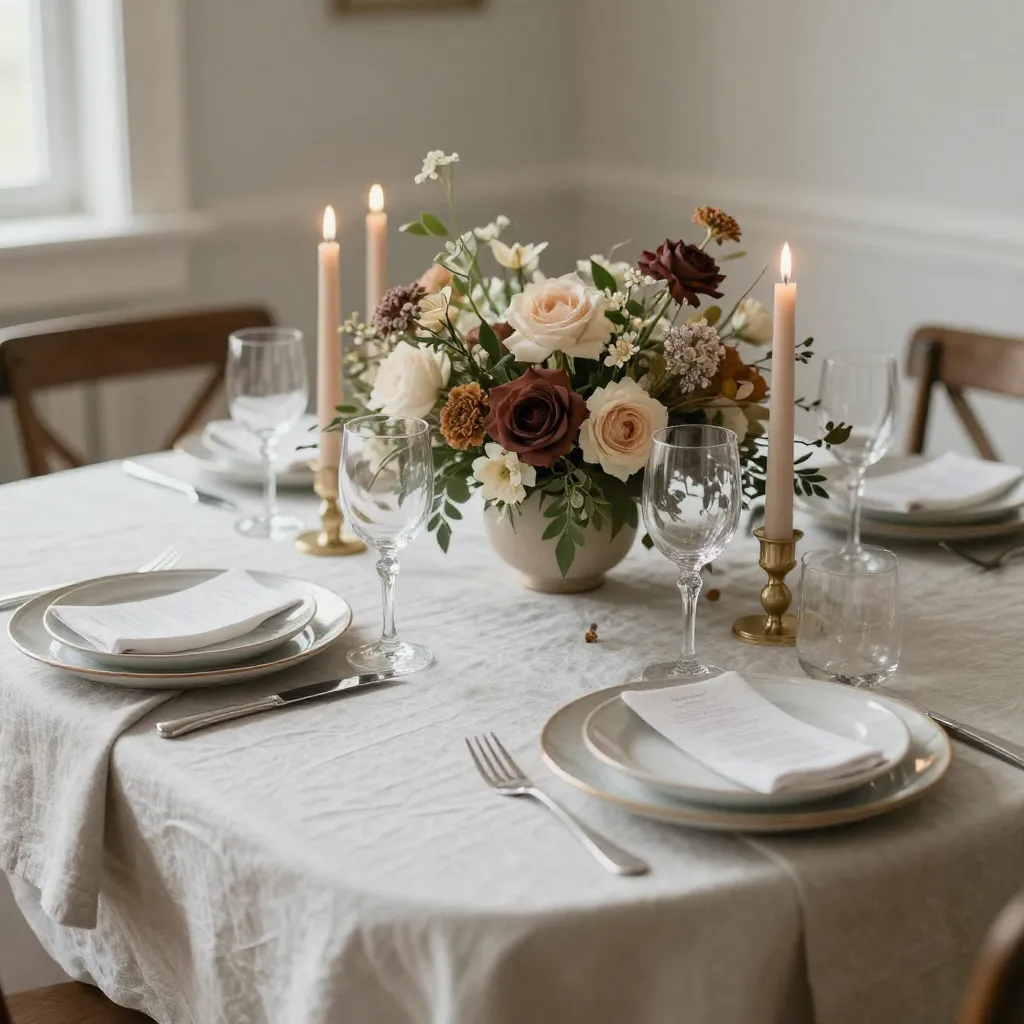
Natural Daylight (5000K-6500K)
Daylight provides accurate color representation, revealing true tones and textures. Cooler whites appear crisp and clean, while warmer tones maintain their character.
Cool Light (4000K-5000K)
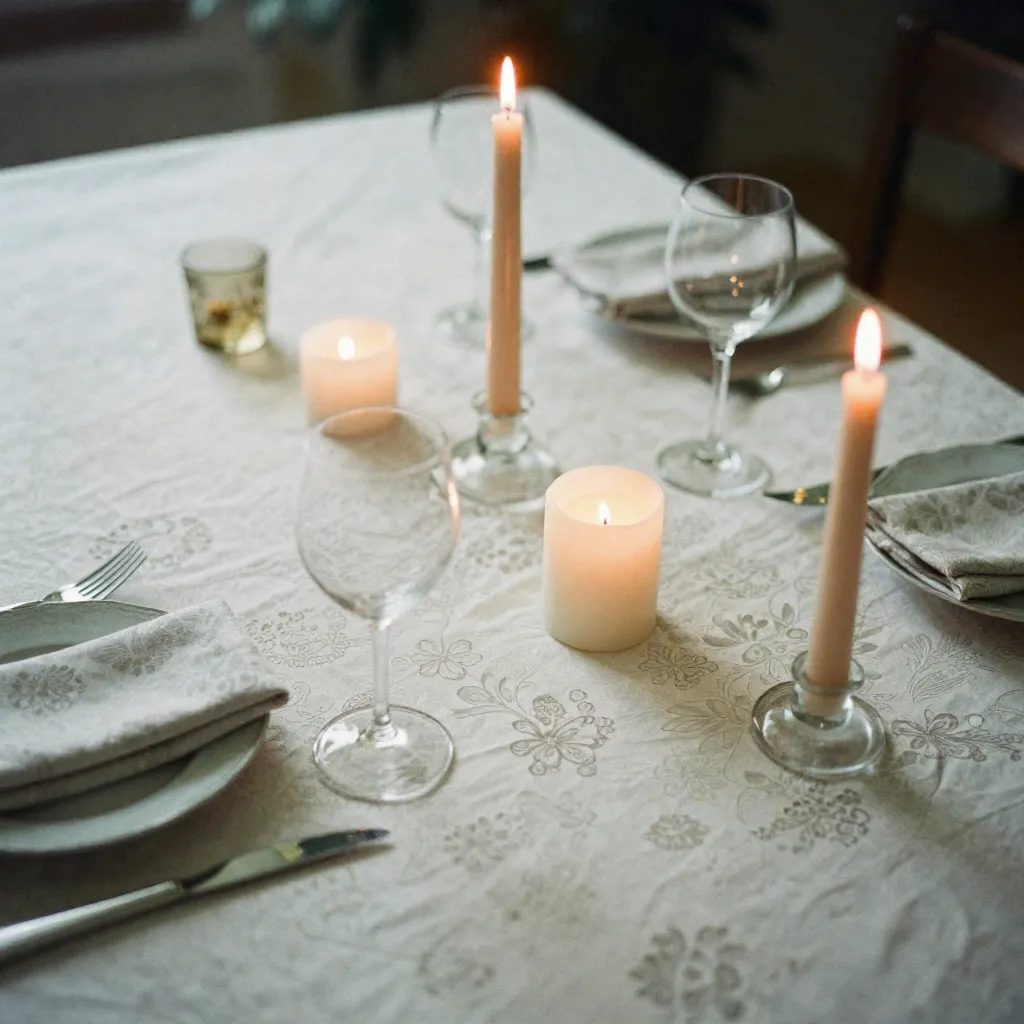
LED and fluorescent sources can make warm-toned linens appear washed out. Consider this when selecting textiles for spaces with specific lighting conditions.
Thoughtful Hosting
Creating environments that facilitate connection and conversation
Visual Comfort
A well-designed table creates visual comfort that allows guests to relax and engage. Clutter-free arrangements reduce cognitive load, while thoughtful details demonstrate care and attention.
The balance between formality and warmth is delicate. Too structured can feel rigid, while too casual may lack intentionality. Finding the middle ground creates spaces that feel both special and accessible.
Conversational Flow
Table arrangements can facilitate or hinder conversation. Consider sightlines, spacing, and the placement of decorative elements to ensure guests can easily see and interact with each other.